




Please Call Hotel for Special Pricing
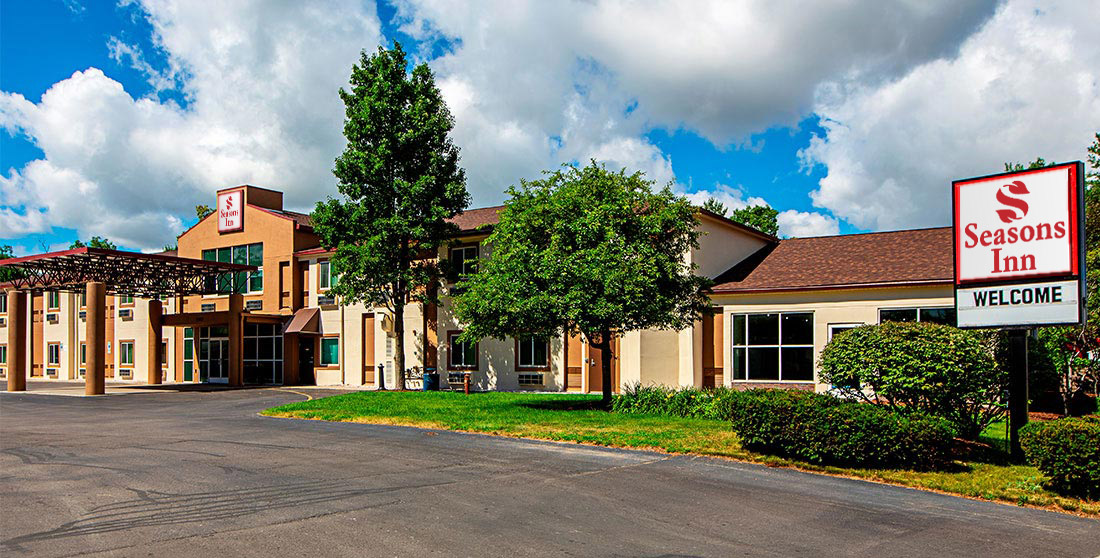
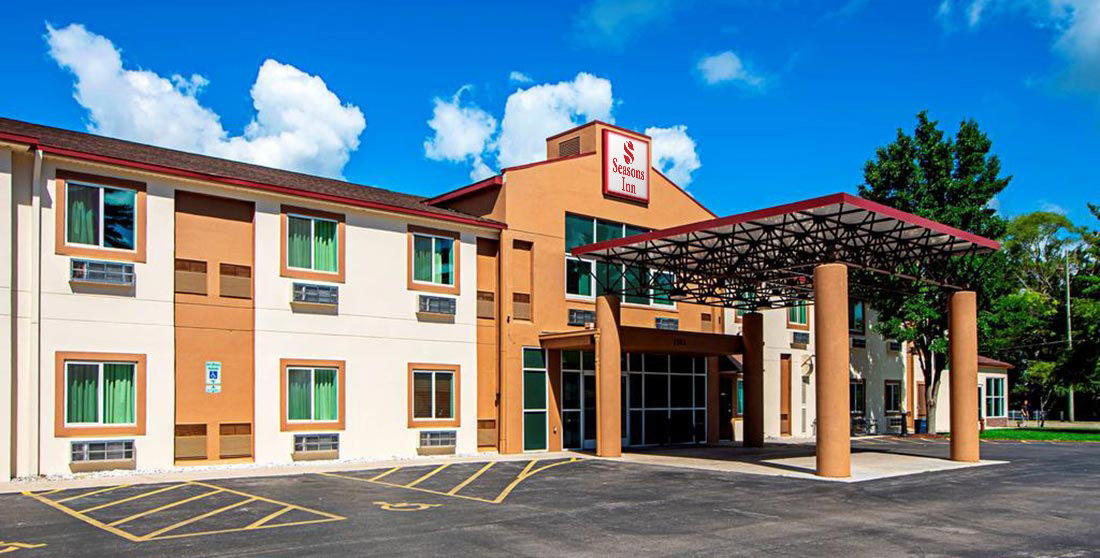
Seasons Inn Traverse City is located in the heart of Traverse City and four miles from downtown Traverse City. This hotel is within a short distance to Northwestern Michigan College, Cherryland Mall, and Munson Medical Center. Plenty of restaurants are within walking distance, or a short drive from the hotel.
Located in the heart of Traverse City, one of the most popular resort towns in Michigan, the Seasons Inn Traverse City combines comfort and convenience to your stay. This hotel is near great attractions such as Traverse City State Park, the beautiful beach on Grand Traverse East Bay, and Grand Traverse Resort. Other nearby attractions are Grand Traverse Mall and Turtle Creek Casino.

Seasons Inn Traverse City offers both comfort and convenience. This pet-friendly, family-friendly hotel offers free Wi-Fi, free parking, indoor heated swimming pool and indoor hot tub, free continental breakfast (Due to COVID-19 our free continental breakfast is Temporarily Suspended) as well as free coffee and tea in the lobby. All guest rooms include a flat screen TV, hair dryer, iron and ironing board. Select rooms offer microwave, mini-refrigerator, in-room coffee and large work desks. Business travelers will welcome additional conveniences like access to copy and fax services. Guests will also enjoy our coin laundry. One well-behaved family pet per room is always welcome.
LGBTQ culture is increasingly recognizing that to support trans people is to support the most vulnerable within the coalition. The slogan "No Justice, No Pride"—chanted at Pride parades—reflects a growing critique of mainstream, commercialized Pride that excludes trans and queer people of color.
The acronym LGBTQ represents a coalition of gender and sexual minorities bound by a shared history of marginalization. However, the "T" (transgender) has a distinct conceptual foundation from the "LGB" (lesbian, gay, bisexual). The former pertains to gender identity —one’s internal sense of being male, female, or something else—while the latter pertains to sexual orientation —one’s pattern of emotional or erotic attraction. This fundamental difference has led to a unique dynamic: the transgender community is both a vital part of LGBTQ culture and a distinct group with priorities that sometimes conflict with the dominant narratives of gay and lesbian communities. This paper explores this dual position, analyzing the historical roots of the alliance, the emergence of trans-exclusionary movements, and the contemporary push toward a more integrated and nuanced understanding of gender and sexuality. shemalestubes
The current landscape shows both hope and regression. On one hand, media representation (e.g., Pose , Disclosure , Elliot Page’s coming out) has accelerated public understanding of trans lives. Many LGB organizations have formally reaffirmed their commitment to trans inclusion. On the other hand, legislative attacks on trans youth (bathroom bills, sports bans, healthcare restrictions) have created a political environment of heightened vulnerability. LGBTQ culture is increasingly recognizing that to support
This paper examines the complex relationship between the transgender community and the broader LGBTQ (Lesbian, Gay, Bisexual, Transgender, Queer) culture. While often united under a single umbrella for political advocacy against heteronormativity and cissexism, the relationship is characterized by both historical solidarity and significant points of tension. This analysis traces the evolution of this alliance from the mid-20th century to the present day, highlighting key moments of cooperation (e.g., the Stonewall Riots) and divergence (e.g., the "LGB without the T" movement). The paper argues that while the alliance remains strategically vital, recognizing the distinct medical, social, and identity-based needs of transgender individuals is essential for the future of a truly inclusive LGBTQ culture. Ultimately, the paper concludes that the strength of the coalition lies not in erasing differences, but in navigating them through intersectional praxis. However, the "T" (transgender) has a distinct conceptual