Actions Hs Usb Flashdisk Link
Provides integrated results with advanced visual analytical interface.

Provides integrated results with advanced visual analytical interface.
In conclusion, the USB flash disk is far from obsolete. Its core actions—portable storage, secure transport, and bootable media—address needs that cloud services alone cannot fully satisfy, particularly in offline environments or high-security contexts. While cybersecurity risks demand caution, the device’s simplicity, durability, and broad compatibility ensure its continued relevance. As data storage evolves, the USB flash disk stands as a testament to the enduring value of physical, user-controlled media in a wireless world. Note: If your original phrase “actions hs usb flashdisk” contains a typo (“hs” instead of “of” or “has”), this essay interprets it as “the actions of a USB flash disk.” If you intended a different meaning, please clarify, and I will revise accordingly.
Beyond simple storage, the USB flash disk performs the vital action of . Early models were notoriously insecure; anyone who found the drive could access its contents. Modern flash disks, however, incorporate hardware-level AES-256 encryption, biometric fingerprint scanners, or password-protected partitions. This action enables professionals to transport sensitive client data, medical records, or legal documents without relying on potentially vulnerable cloud servers. For government and military use, “self-destructing” flash drives exist that erase all data after a set number of failed access attempts. Thus, the flash disk actively supports data confidentiality and regulatory compliance (e.g., GDPR, HIPAA) when used correctly.
A more technical but equally important action is . Most computers allow booting from a USB drive via the BIOS or UEFI interface. This capability enables users to run lightweight operating systems (e.g., Linux live USB), perform system recovery, or install a fresh copy of Windows or macOS without an optical drive. IT professionals frequently use bootable USB flash disks to diagnose hardware failures, remove persistent malware, or clone hard drives. Without this action, repairing a bricked computer or deploying operating systems across dozens of office machines would be far more cumbersome and time-consuming.
In the rapidly evolving landscape of digital storage, few devices have demonstrated the resilience and utility of the USB flash disk. Since its commercial introduction in the early 2000s, this compact, durable, and rewritable medium has fundamentally altered how individuals and organizations handle data. While cloud storage and high-speed networks have gained prominence, the USB flash disk remains an indispensable tool. Its primary actions—storing, transferring, booting, and securing data—continue to provide unique advantages in accessibility, portability, and functionality.
The most fundamental action of a USB flash disk is . Unlike internal hard drives or even external HDDs, the flash disk requires no external power, is shock-resistant, and fits on a keychain. This allows users to carry entire document archives, multimedia libraries, or software installers in a pocket. For students, professionals, and technicians, the ability to instantly expand a computer’s usable memory or create local backups without an internet connection remains a critical function. The action of “plug-and-play” storage—simply inserting the drive into a USB port and dragging files—democratized file transfer, eliminating the need for CDs or floppy disks.
However, the actions of a USB flash disk are not without significant risks. The same portability that makes it useful also makes it a primary vector for . Infamously, attacks like Stuxnet (2010) spread via USB flash disks to target industrial control systems. A drive inserted into a compromised public computer (e.g., at a library or print shop) can automatically execute malicious scripts via AutoRun features or infect firmware. Furthermore, physical loss remains a major threat—a misplaced flash disk containing unencrypted passwords or corporate data can lead to data breaches. Therefore, responsible use requires consistent antivirus scanning, disabling auto-execution, and encrypting sensitive files.
We offer pricing plans that fit all investigation types and team sizes. Compare and find the best plan for you.

The perfect way to test out your analytical needs and later upgrade to what suites you best. actions hs usb flashdisk
 30 days Licence
All Features Unlocked
No Payments Required
Quick Installation
Easy to Upgrade
Mobile App
30 days Licence
All Features Unlocked
No Payments Required
Quick Installation
Easy to Upgrade
Mobile App

A must have tool for all your IPDR investigative needs. Experience next-gen IPDR analytics with C5 CAT Edition. In conclusion, the USB flash disk is far from obsolete

The optimum choice of IOS to let Application work as a client-server in local network or stand-alone as well. As data storage evolves, the USB flash disk

The most powerful option for mid and big-size organizations looking to get as much data as possible.

This edition is a bespoke data analytical solution. Designed, developed and tailored to fit your organizations specific needs
Unlimited Big Data, Ultimate Solution
Data with no limits for Big data analysis with state of art data security measures.Enterprise edition of the C5 CDR analyzer consist of a server license and a complimentary copy of the client License. Server License would be installed on the server thereafter client license would be installed on a computer connected to the server through LAN network. This implementation would enable C5 client to connect to the server and access the data on the basis of assigned privileges. Thus maintaining data security would be easy and data is located centrally.
Ultimate solution for Big Data Analysis
Ultimate solution for Big data analysis with state of art data security measures.Enterprise edition of the C5 CDR analyzer consist of a server license and a complimentary copy of the client License. Server License would be installed on the server thereafter client license would be installed on a computer connected to the server through LAN network. .This implementation would enable C5 client to connect to the server and access the data on the basis of assigned privileges. Thus maintaining data security would be easy and data is located centrally.
The C5 CDR Analyzer's Professional Edition is capable of working as a client to the server in local network as well as this edition also can be used as stand-alone; required data from the server can be transferred into this and can be carried anywhere needed for analysis.
A Lite version of the acclaimed C5 CDR ANALYZER made by Prosoft e-Solutions India Pvt. Ltd. The desktop application that is convenient and simple to use, helps you find crucial information expeditiously. Ideal for day to day CDR analysis, it’s designed from the ground up with performance and accuracy being the focus of development. With an intuitive UI and user-friendly operations this application makes it a must have, for anyone with the need and know-how of CDR analytics.
Android Application
For the officers on the move

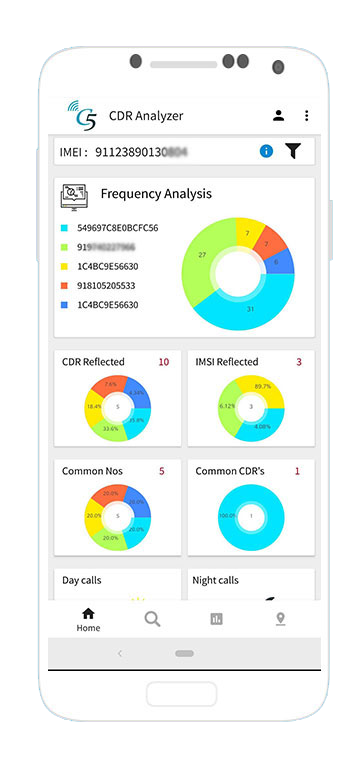
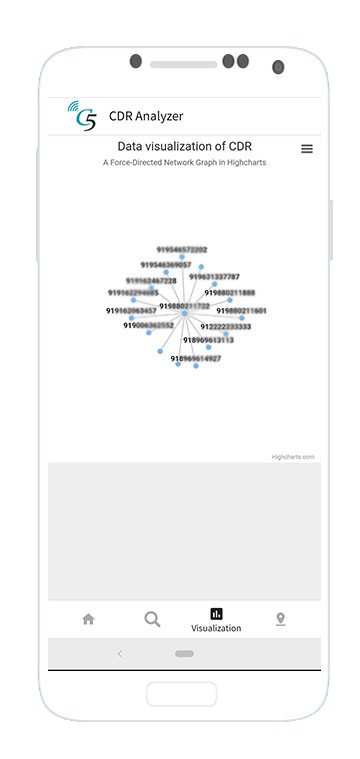
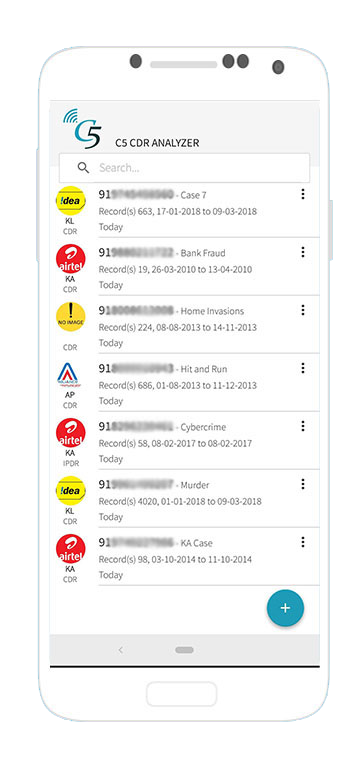
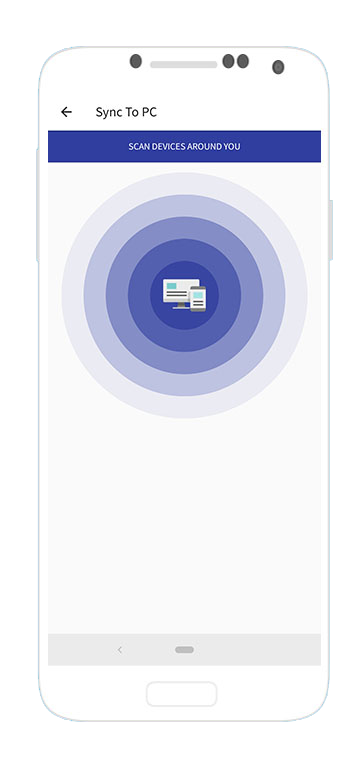
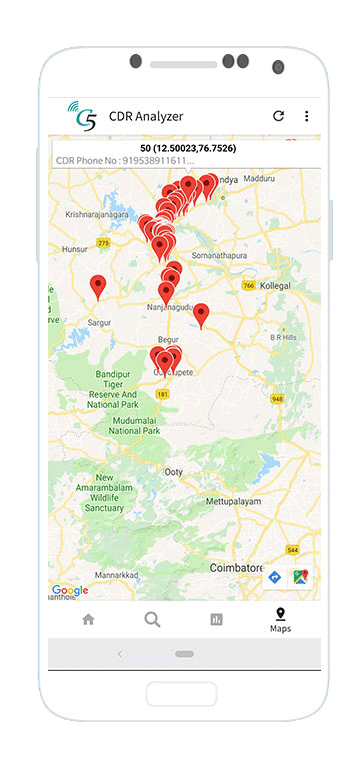
Providing you with powerful analytical tools, is what we do best.




























In conclusion, the USB flash disk is far from obsolete. Its core actions—portable storage, secure transport, and bootable media—address needs that cloud services alone cannot fully satisfy, particularly in offline environments or high-security contexts. While cybersecurity risks demand caution, the device’s simplicity, durability, and broad compatibility ensure its continued relevance. As data storage evolves, the USB flash disk stands as a testament to the enduring value of physical, user-controlled media in a wireless world. Note: If your original phrase “actions hs usb flashdisk” contains a typo (“hs” instead of “of” or “has”), this essay interprets it as “the actions of a USB flash disk.” If you intended a different meaning, please clarify, and I will revise accordingly.
Beyond simple storage, the USB flash disk performs the vital action of . Early models were notoriously insecure; anyone who found the drive could access its contents. Modern flash disks, however, incorporate hardware-level AES-256 encryption, biometric fingerprint scanners, or password-protected partitions. This action enables professionals to transport sensitive client data, medical records, or legal documents without relying on potentially vulnerable cloud servers. For government and military use, “self-destructing” flash drives exist that erase all data after a set number of failed access attempts. Thus, the flash disk actively supports data confidentiality and regulatory compliance (e.g., GDPR, HIPAA) when used correctly.
A more technical but equally important action is . Most computers allow booting from a USB drive via the BIOS or UEFI interface. This capability enables users to run lightweight operating systems (e.g., Linux live USB), perform system recovery, or install a fresh copy of Windows or macOS without an optical drive. IT professionals frequently use bootable USB flash disks to diagnose hardware failures, remove persistent malware, or clone hard drives. Without this action, repairing a bricked computer or deploying operating systems across dozens of office machines would be far more cumbersome and time-consuming.
In the rapidly evolving landscape of digital storage, few devices have demonstrated the resilience and utility of the USB flash disk. Since its commercial introduction in the early 2000s, this compact, durable, and rewritable medium has fundamentally altered how individuals and organizations handle data. While cloud storage and high-speed networks have gained prominence, the USB flash disk remains an indispensable tool. Its primary actions—storing, transferring, booting, and securing data—continue to provide unique advantages in accessibility, portability, and functionality.
The most fundamental action of a USB flash disk is . Unlike internal hard drives or even external HDDs, the flash disk requires no external power, is shock-resistant, and fits on a keychain. This allows users to carry entire document archives, multimedia libraries, or software installers in a pocket. For students, professionals, and technicians, the ability to instantly expand a computer’s usable memory or create local backups without an internet connection remains a critical function. The action of “plug-and-play” storage—simply inserting the drive into a USB port and dragging files—democratized file transfer, eliminating the need for CDs or floppy disks.
However, the actions of a USB flash disk are not without significant risks. The same portability that makes it useful also makes it a primary vector for . Infamously, attacks like Stuxnet (2010) spread via USB flash disks to target industrial control systems. A drive inserted into a compromised public computer (e.g., at a library or print shop) can automatically execute malicious scripts via AutoRun features or infect firmware. Furthermore, physical loss remains a major threat—a misplaced flash disk containing unencrypted passwords or corporate data can lead to data breaches. Therefore, responsible use requires consistent antivirus scanning, disabling auto-execution, and encrypting sensitive files.